


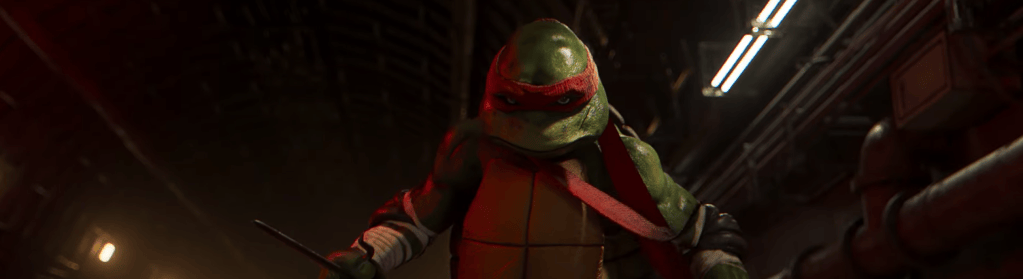
When director and creator John Likens set out to reimagine Raphael in a darker, grittier cinematic world, he wasn’t interested in nostalgia alone. He wanted intensity. Weight. Brutality. A version of the Teenage Mutant Ninja Turtles grounded in shadow, steel, and subway grit — something long-time fans have been hungry to see on the big screen.

The result? A high-impact action short centered on Raphael battling The Foot in a dimly lit underground station — a film that surpassed 2 million views on YouTube within its first few weeks.
At the heart of that realism: performance-driven motion capture from Actor Capture.
Building a Darker TMNT Universe
Likens had already built momentum with previous shorts spotlighting Donatello and Leonardo before embarking on his most visceral installment yet — Raphael. Known as the most volatile and physically dominant of the Turtles, Raphael demanded a fight sequence that felt raw, grounded, and punishing.


Likens collaborated with Oni Stunts and Fight Coordinator James Newman to design a brutal, tightly choreographed battle between Raphael and multiple Foot Soldiers. Every strike, counter, and environmental interaction was carefully mapped out before stepping into the volume.
With the fight language established, Likens turned to motion capture veterans Actor Capture to translate that choreography into digital performance.
From FBX to Fully Characterized Digital Fighter
The pipeline began with Likens delivering his Raphael and Foot Soldier FBX models to Actor Capture.
Using Reallusion Character Creator, the team characterized and prepared the models for animation, ensuring clean skeletal structures, proper retargeting setups, and compatibility with the capture system.


Quick motion tests were captured and sent back for creative approval — allowing Likens and Newman to evaluate performance timing, scale, and physicality before committing to the full shoot. Thanks to the efficiency of the Reallusion pipeline, turnaround was rapid. Once approved, Actor Capture moved into full production mode at its Atlanta studio.

Two Days Inside the Capture Volume
The action shoot brought together:
- Director John Likens, Fight Coordinator James Newman, Stunt team from Oni Stunts, Performers including Alan Silva, Bee Xiong, Joshua Davidson, and Tony Sre, and the Actor Capture technical crew.
- Inside a volume powered by 40 optical motion capture cameras and a 13×25 LED wall, the team recorded the entire fight sequence. The LED wall provided immersive lighting reference and spatial awareness, while the optical system ensured high-fidelity body tracking — crucial for preserving the nuance of stunt-driven choreography.
- Performances weren’t just about combat — they were about character. Raphael’s aggression had to feel personal. The Foot Soldiers had to move with disciplined precision. Subtle weight shifts, pauses between blows, and grounded landings all contributed to the realism that fans responded to.

From Capture to Final Frame
After capture, the data was processed and cleaned in OptiTrack Motive, ensuring clean solves and accurate skeletal performance. The animation was then transferred into Maxon Cinema 4D for final animation refinement, lighting, and rendering.
For visualization during production, 3D models were also sent into Unreal Engine for mocap previs — allowing the creative team to see the action unfold in real time and make on-set decisions about pacing, framing, and choreography adjustments.
This hybrid workflow — optical capture, real-time visualization, and high-end 3D rendering — gave Likens cinematic control while preserving the authenticity of live performance.
Why It Resonated with Fans
The success of Raphael wasn’t just about nostalgia. It was about:
Performance authenticity driven by stunt professionals. High-end motion capture fidelity. Cinematic lighting and environment design. A grounded, mature tone many TMNT fans have long requested.
By blending live stunt choreography with advanced motion capture and digital animation tools, Actor Capture helped bridge the gap between indie fan film and theatrical-quality action.
A Glimpse of What Could Be
Likens’ trilogy of TMNT shorts demonstrates what’s possible when passionate storytelling meets production-grade performance capture. With over two million views and strong fan demand, Raphael proves there’s an audience ready for a darker take on the Turtles. And behind the digital shell and sais? Real performers. Real choreography. Real motion capture. Actor Capture didn’t just capture Raphael and The Foot. They brought them to life.
More About Actor Capture: www.ActorCapture.com
More about John Likens: www.JohnLikens.com
Related Posts
- Pro-Level Mocap Sync: Stream Vicon in iClone for Real-Time Animation
- Actor Capture Syncs Stunt and Performance Mocap with iClone Timecode
- How Art Camp used iClone & CC4 in Indochine’s La Belle et la Bête

