Animation Journey: From Drawing Cartoons to 3D Worlds
This article is the second installment of my Garry’s ongoing journal series, From 2D to 3D. If you haven’t read the first post yet, we recommend starting there: From 2D to 3D: Why After 10 Years I Moved to 3D Animation.
In that opening chapter, I share the pivotal moment that led me to transition from a decade of 2D work into the world of 3D animation. Now, in this second entry, I dive deeper into the tools, challenges, and creative breakthroughs shaping my journey.

Entry 2 – My First Steps In A 3D World
If you’d asked me four months ago whether I could create a fully custom 3D character, I’d have laughed nervously, changed the subject, and pretended to know where my glasses were. But here I am, knee deep in polygons, sliders, and UV maps, slowly but surely learning how to bring my cartoon world into the third dimension.
This is the second blog in my series documenting my jump from 2D to 3D animation, and let me tell you, the learning curve has been more of a learning vertical wall. But we’ll get to that. First, let’s rewind to the beginning.

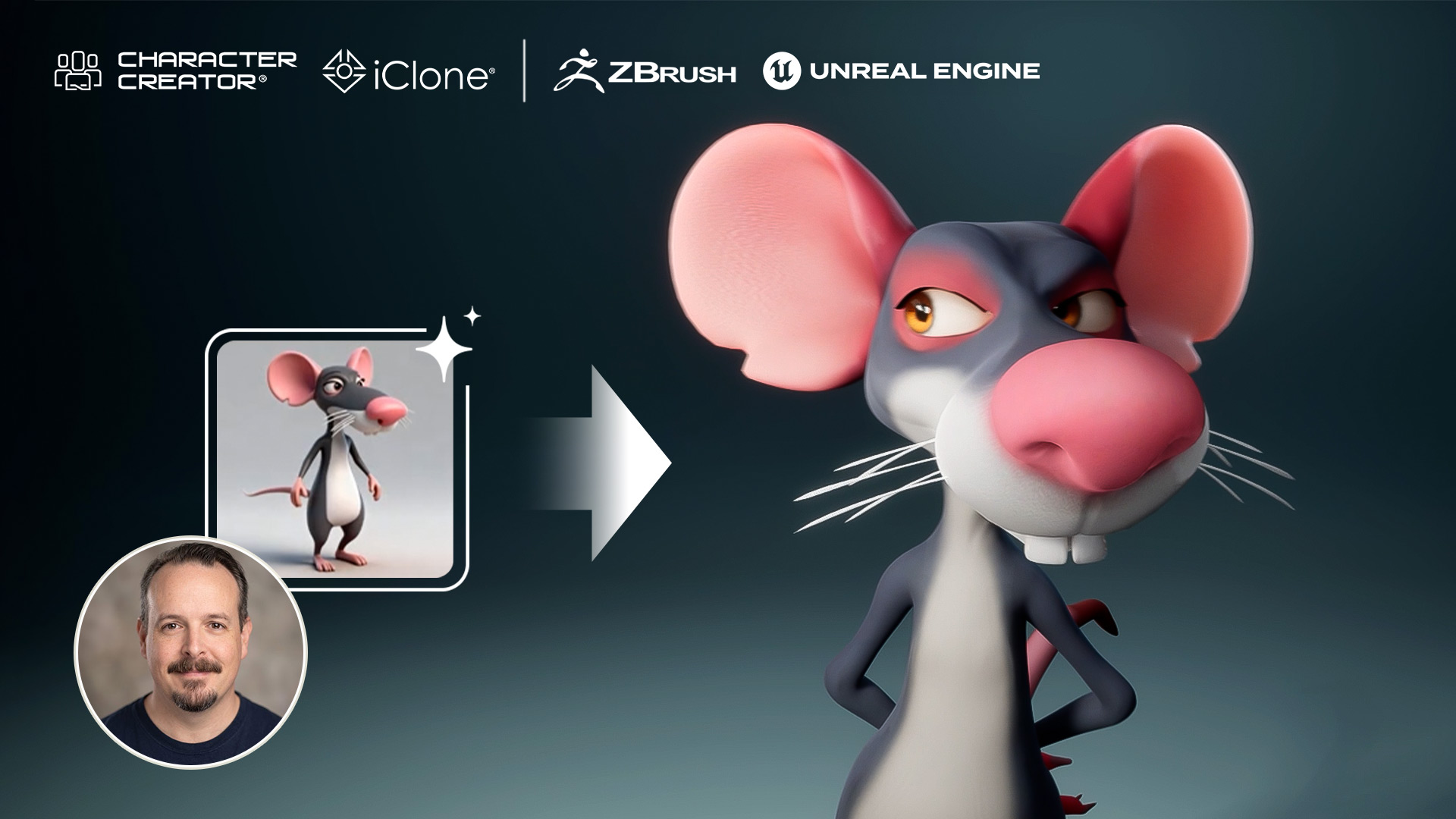
When I first dipped my toe into 3D, I knew I wanted to build my own characters from scratch, not just use existing assets. That meant learning how iClone and Character Creator 4 (CC4) worked, and more importantly, figuring out which tools would actually help me create characters that still felt like “mine.”
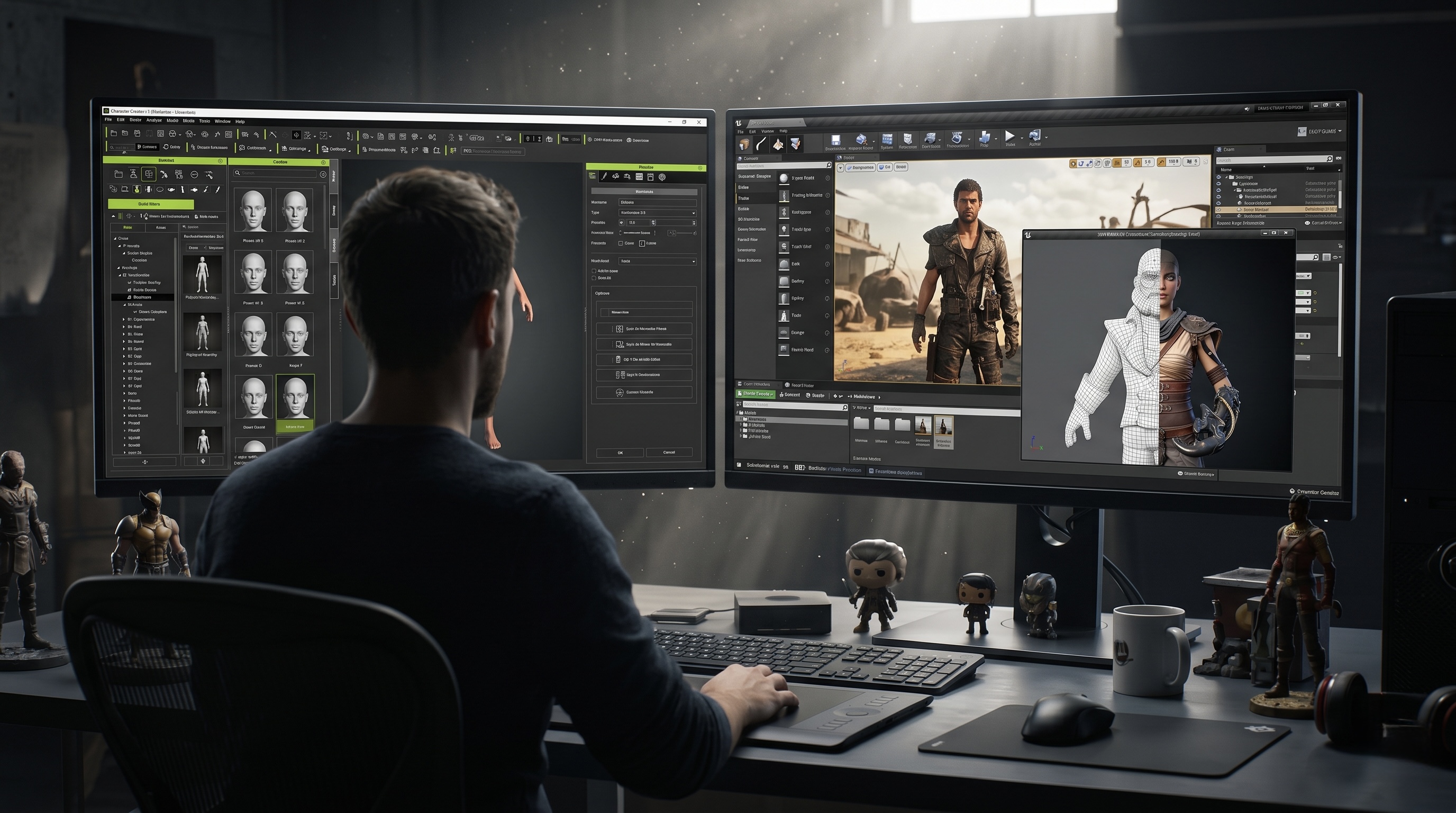
My early impressions of iClone and CC4 were honestly impressive. These tools felt powerful and professional, but at the same time, there was something familiar about them. Because I’d spent years with Cartoon Animator, I instantly recognised the DNA. The UI structure, the logic behind the sliders, even the naming conventions. That familiarity gave me a bit of a head start.
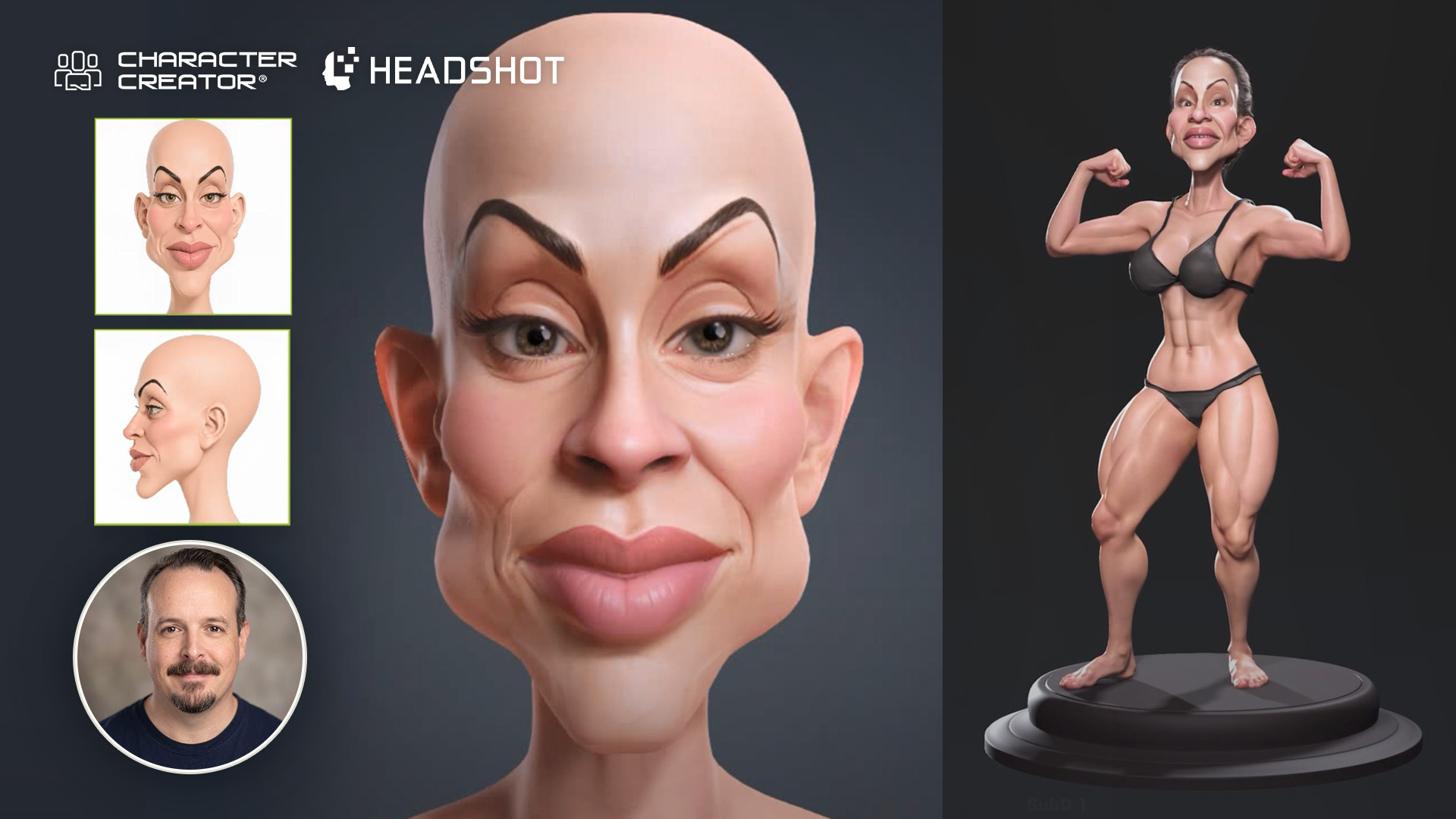
I also started exploring Headshot, which is Reallusion’s face generator plugin. At first glance, I assumed it was just for making realistic humans. I was wrong. Gloriously wrong. With some creative thinking (and a lot of morph slider nudging), I realised I could push HeadShot well into the cartoon space.

I initially thought I’d use the box modelling technique in Blender to sculpt my characters. It seemed like the “real” way to do it, the purist approach. So I experimented with that. But quickly I realised I was in way over my head. The idea of building a character from a cube with extrusion tools and loop cuts was exciting….. until it wasn’t.
Instead, I made the decision to use the tools that make sense for where I am now, not where I think I should be. That meant going all in on Character Creator and Headshot, and only jumping into Blender when I needed to tweak something I couldn’t do in CC4, like specific mesh edits or object manipulations.
Because CC4 and iClone come from the same company that makes Cartoon Animator, a tool I know backwards, the transition felt smoother. The UI language made sense. I didn’t have to relearn how to navigate the workspace or figure out where the “make head bigger” button had run off to.

So far, I’ve been using HeadShot 2.0 to create custom cartoon faces and Character Creator for the bulk of the shaping work, especially facial detail. CC4 has some wonderful tools like Edit Mesh for when I need to push shapes further than the sliders allow and for me, the all important Morph Slider Editor to build custom expressions that would let my characters unique personalities shine through.
Each day I learn something new. Just this week, I figured out how to create morph sliders for rescaling teeth during an expression. I’m not saying I’m a wizard, but if the pointy hat fits.
Coming from 2D character design, where I could sketch something and have it ready to animate in a day, 3D felt like moving through molasses. The technical side is heavier, and yes, I struggled. Hard.
There were nights where I closed the software and walked away frustrated, convinced I’d never finish even one fully custom character. But I kept going, out of sheer stubbornness. I made a promise to myself, just finish one, no matter how long it takes.
I need to point out that I am not doing this alone. Rampa Tinling and Peter Alexander, two pros in the Reallusion community, have been incredibly generous with their time. Their encouragement gave me the push I needed when I hit a wall.
I also started a Facebook group to share my progress, ask for help, and support others doing the same thing. That group has turned into an unexpectedly warm little community. We cheer each other on, laugh at our mistakes, and swap solutions freely.

The official Reallusion YouTube channel has been invaluable. And it’s come full circle for me because years ago, I learned Cartoon Animator by watching Kai DeNeve’s tutorials. And now, here he is again, guiding me into 3D. Same teacher, new dimension.
Each day, things feel a little more intuitive. I don’t have to look up how to move a vertex anymore. The fog is lifting.

When I wrote my first blog post, I wasn’t confident I could do this. I genuinely worried that I wasn’t smart enough to make sense of the 3D world. That I’d hit a wall and walk away defeated, which I had done twice already in the past.
But now, writing this second post, something’s shifted. I still have a lot to learn, and sure, it’s not going to happen overnight. But now I believe I can get to the end of this journey. I believe I can finish what I started.
And most importantly, I’m having fun.

Garry Pye – 2D/3D Animator | Content Developer
Garry Pye is an Australian illustrator, animator, and Cartoon Animator instructor with over a decade of experience in the animation industry. Known for his unique blend of creativity and humor, Garry’s work spans from teaching animation techniques to creating innovative content that helps both novice and experienced animators improve their skills.
Garry’s enthusiasm for storytelling and animation shines through in all his projects, whether it’s creating animated shorts, preparing educational tutorials, or sharing his expertise by teaching. With a passion for making animation accessible and fun, Garry has built a community of learners who not only appreciate his knowledge but also his infectious sense of humor and dedication to his craft.
Follow Garry Pye’s iClone Page|2D Animation Page|2D Marketplace
Related Posts
- The Evolution of Cartoon Animator: A Conversation with Garry Pye
- Control Diverse Characters for Live Performances with CTA5.3
- How to Level Up Your 2D Animations Like a Professional