Welcome to AI Storytellers, a new series from Reallusion that explores the creative possibilities of AI Studio through the eyes of storytellers. In each episode, we’ll go behind the scenes with creators, filmmakers, artists, and innovators to discover how they’re using AI Studio to develop characters, build worlds, and bring their stories to life. We begin with Space Rocks, an original sci-fi adventure created by John Martin, showcasing a production workflow that combines Character Creator, iClone, AI Studio, and generative AI to create consistent AI Actors and cinematic storytelling. Future episodes will spotlight additional storytellers and projects, further exploring the creativity, techniques, and innovations shaping the future of AI-powered storytelling.
One Creator. One Vision. An Entire Universe.
Every science fiction story begins with a spark of imagination.
For filmmaker and storyteller John Martin, that spark became Space Rocks, a cinematic exploration of deep space, alien life, and visual storytelling created through AI-powered filmmaking techniques. Featured in the AI Studio Storytellers series, Space Rocks showcases how a single creator can develop characters, worlds, and cinematic sequences using AI as a creative partner while maintaining complete artistic direction.
The project follows an alien civilization navigating life among drifting asteroids, blending science fiction aesthetics with cinematic world-building. What makes Space Rocks unique is not only the story itself, but the process behind its creation—a workflow built around character development, visual continuity, shot design, and AI-generated filmmaking.
Building a World from Imagination

Unlike traditional productions that begin with physical sets, crews, or large production teams, Space Rocks was developed through a process of iterative visual exploration.
John Martin began by defining the visual language of the universe: weathered asteroid surfaces, glowing celestial phenomena, alien technology, and creatures adapted to survive in the harsh environment of space. Through AI Studio, concepts rapidly evolved into cinematic visuals, allowing ideas to move from imagination to screen in a fraction of the time required by traditional workflows.

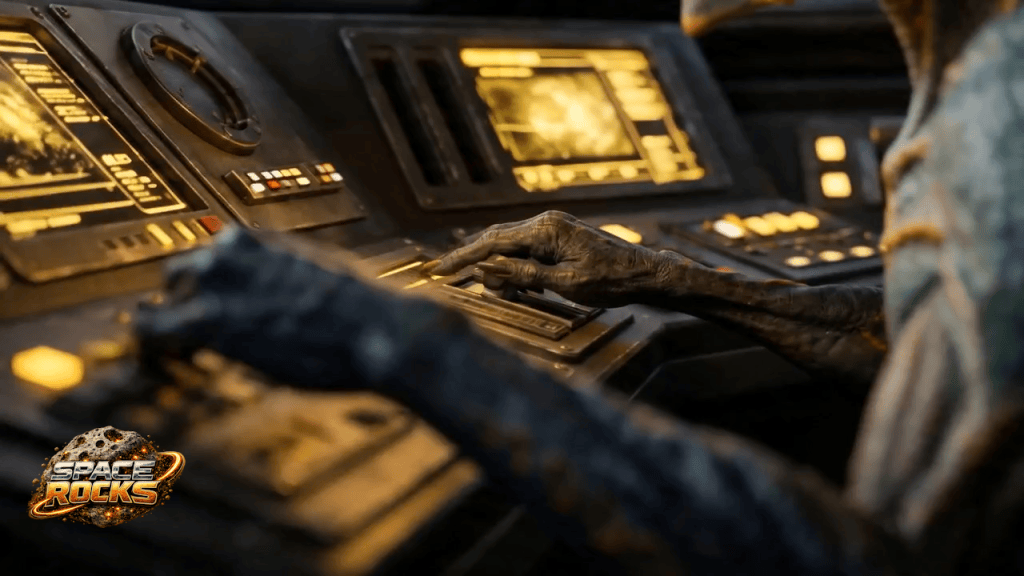
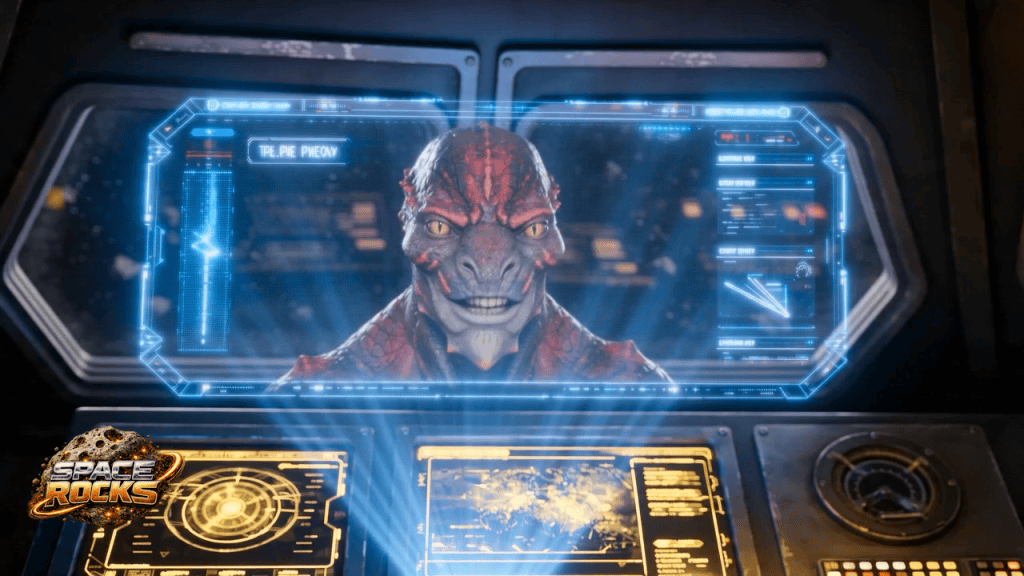
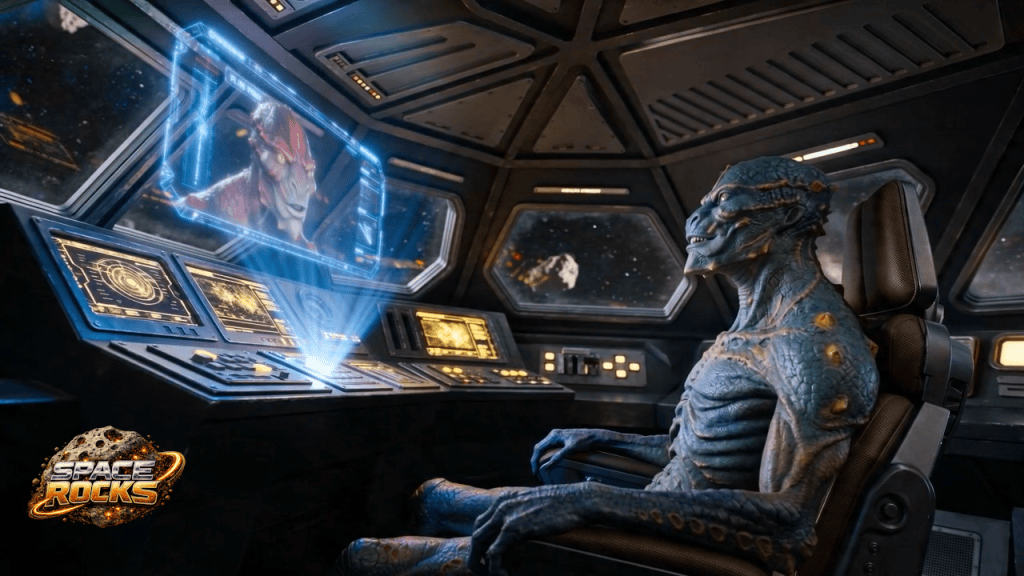
Each image became a stepping stone toward a larger cinematic vision, refining the look and feel of the world while maintaining consistency across the project. Instead of generating disconnected artwork, every shot was designed to contribute to a larger narrative universe.
Creating an AI Actor

At the center of Space Rocks is a distinctive alien protagonist brought to life through a hybrid 3D and AI workflow.
The process began in Character Creator, where Martin cast the alien as a fully realized digital character. Rather than relying solely on prompts to generate different versions of a creature, the character was first established as a controllable 3D asset with defined anatomy, facial features, proportions, and visual identity.
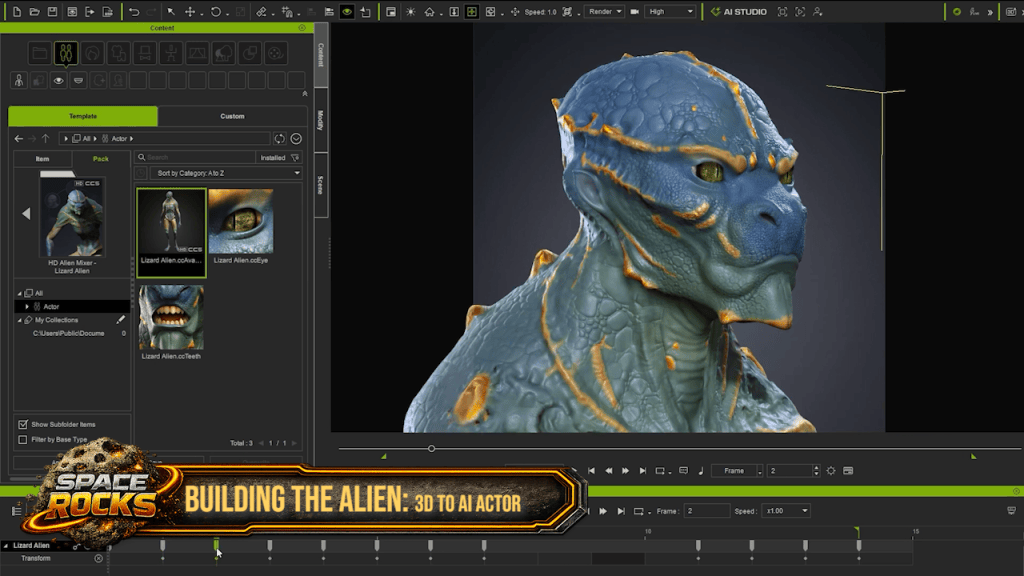
Once the character was finalized, iClone was used to prepare the character for AI-driven production. By establishing the performer in 3D first, Martin created a foundation that could be used across an entire production while maintaining continuity of appearance from scene to scene.
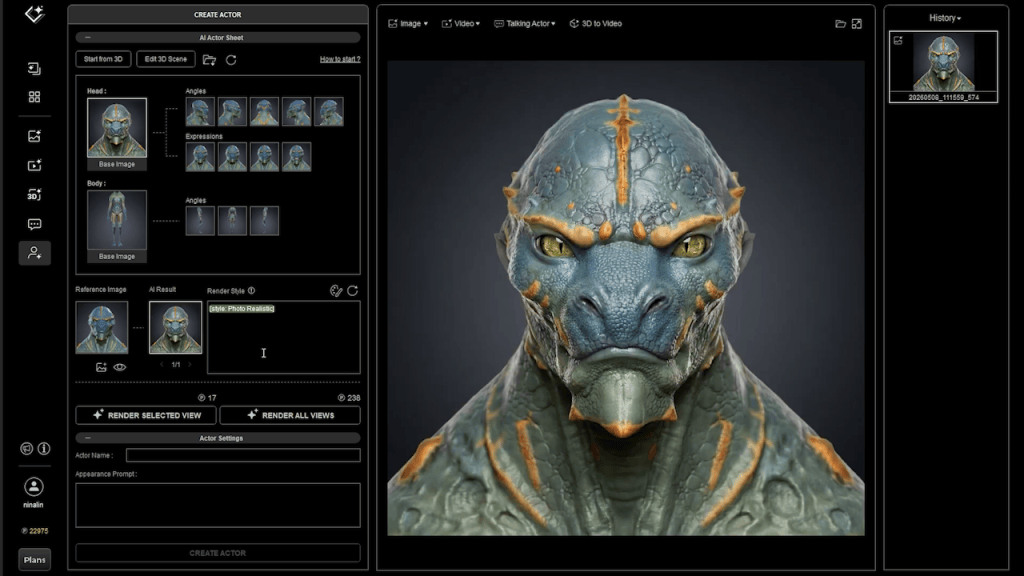
Using AI Studio, the character was transformed into an AI Actor—a creator-directed digital performer capable of appearing consistently across multiple shots, environments, and story moments. This workflow bridges traditional character creation with AI-powered image generation, giving storytellers a reliable method for preserving character identity throughout a project.
For Space Rocks, this approach solved one of the most significant challenges facing AI filmmaking: consistency.

Instead of producing a different interpretation of the character with every generation, the AI Actor maintained recognizable features, proportions, and personality throughout production.
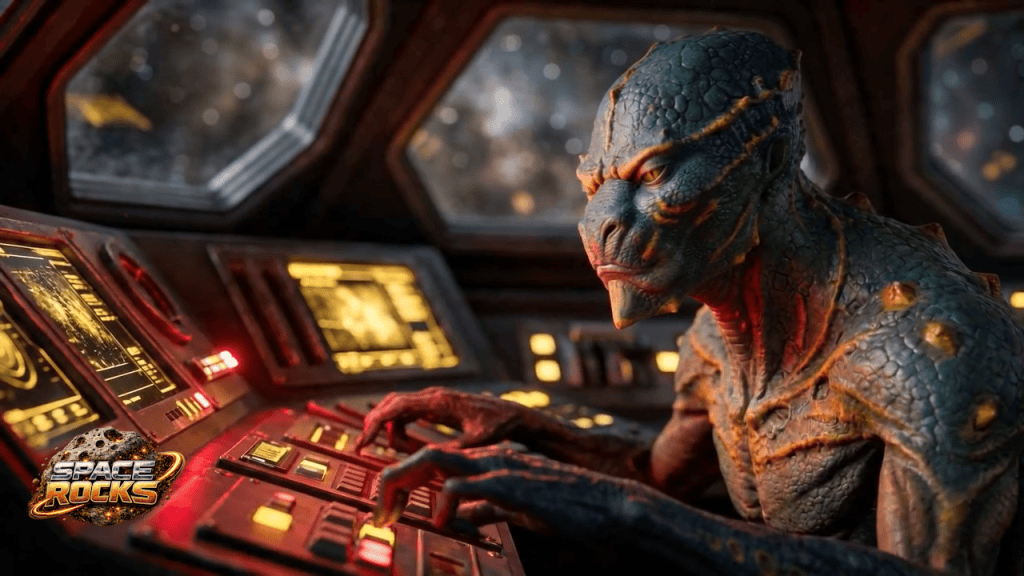


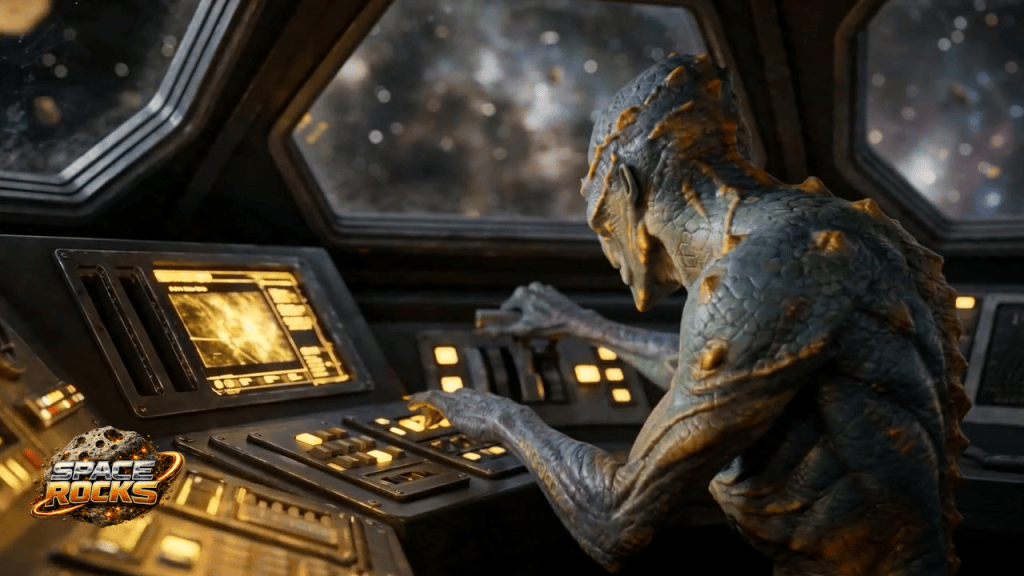
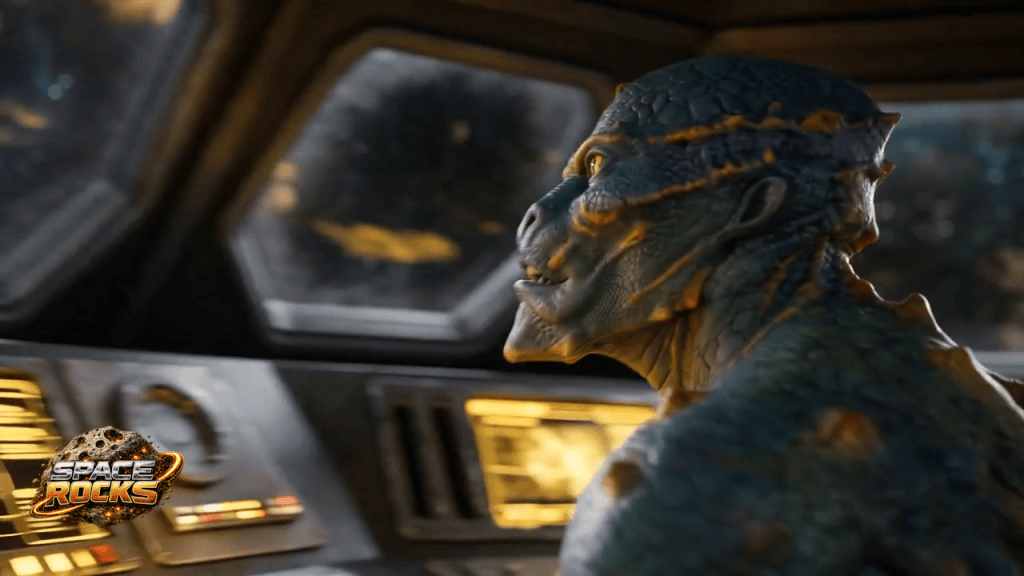
The result is an alien character that feels less like a collection of generated images and more like a true cinematic performer inhabiting a believable science-fiction universe.
Thinking Like a Director

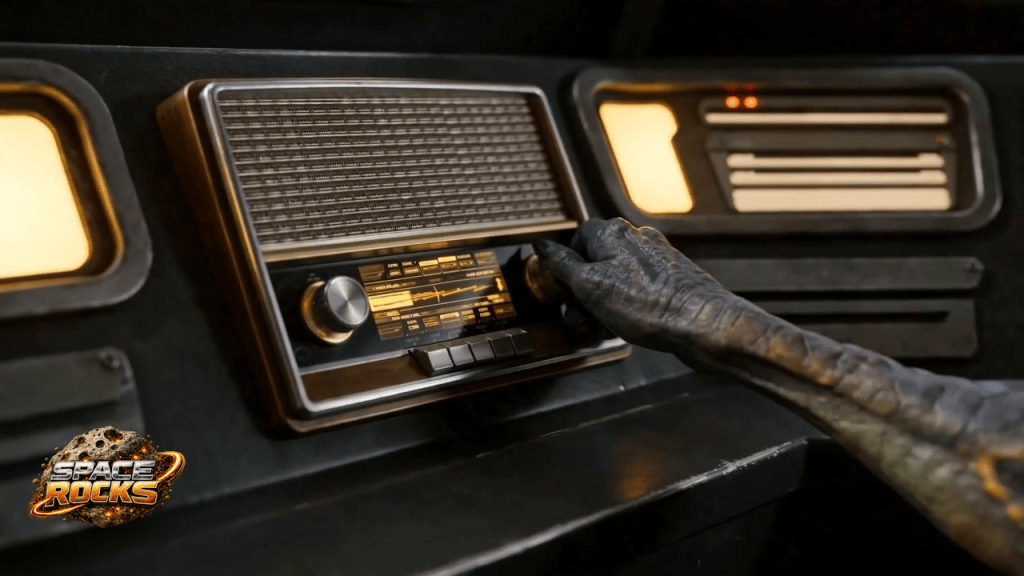
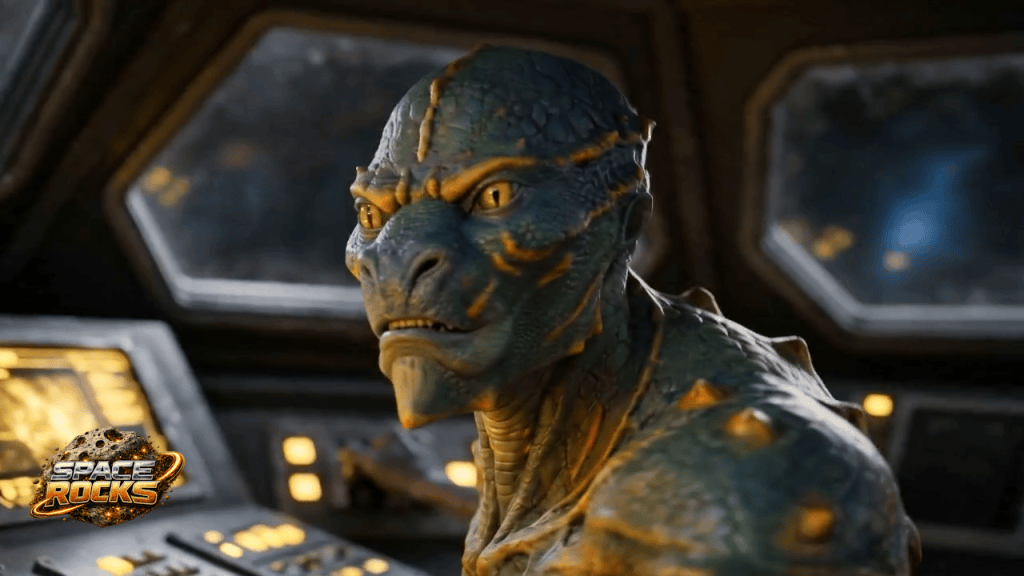

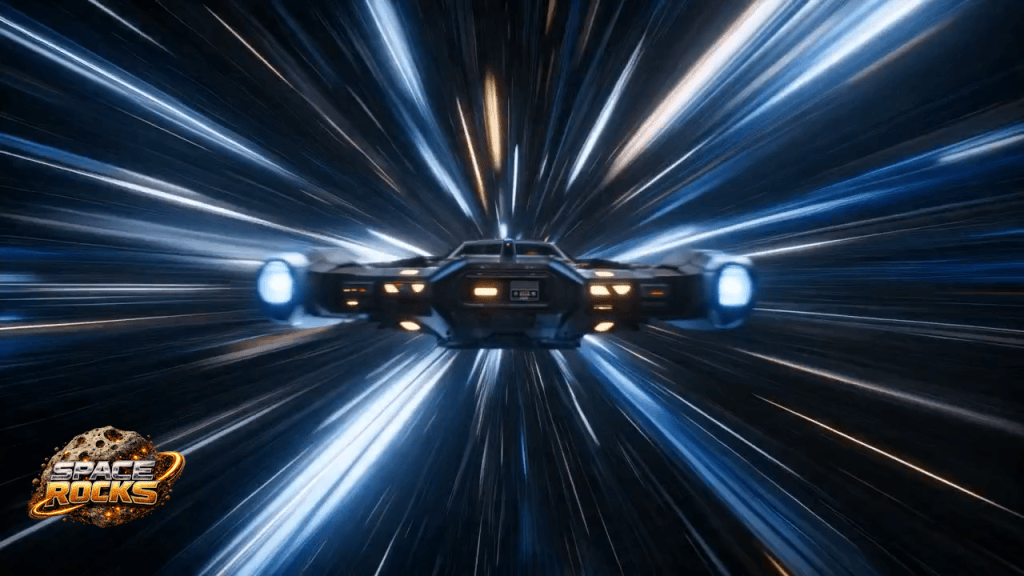
One of the defining characteristics of Space Rocks is its cinematic approach.
Every image was treated as a shot rather than a standalone picture. Composition, camera placement, lens choice, lighting, and visual storytelling guided the creative decisions throughout production.
This filmmaking mindset transformed AI from a simple image-generation tool into a visual production partner. Instead of asking AI to create random artwork, each prompt was designed to support a specific moment in the story.
The result is a project that feels directed rather than generated.
By approaching each sequence with the mindset of a filmmaker, Martin was able to create visual continuity, pacing, and emotional progression throughout the project. Every shot served a purpose within the larger narrative.
From Concept to Screen
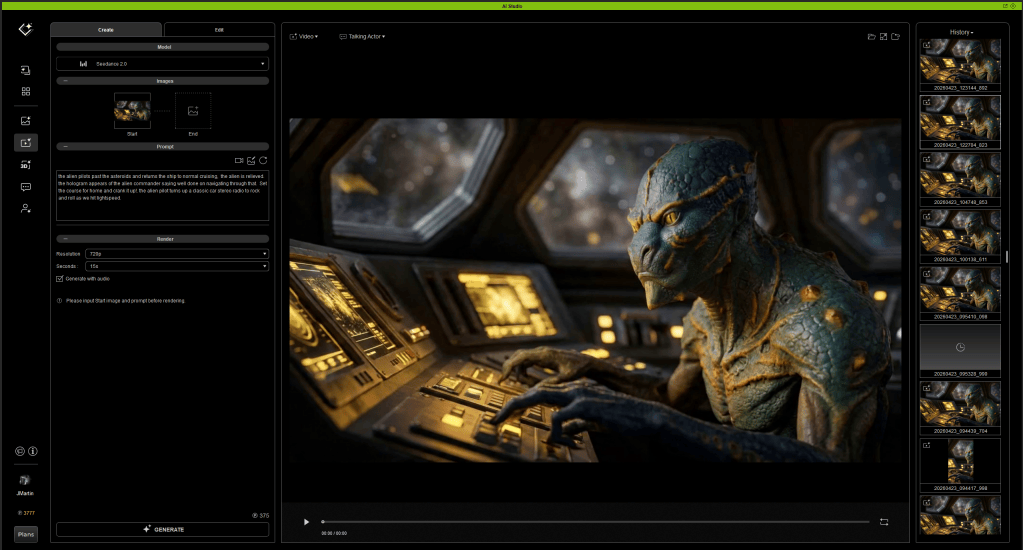
The creation of Space Rocks demonstrates how AI Studio can support storytellers throughout the creative process.
Ideas become concepts. Concepts become characters. Characters become AI Actors. AI Actors become scenes. And scenes become stories.
First shot breakdown
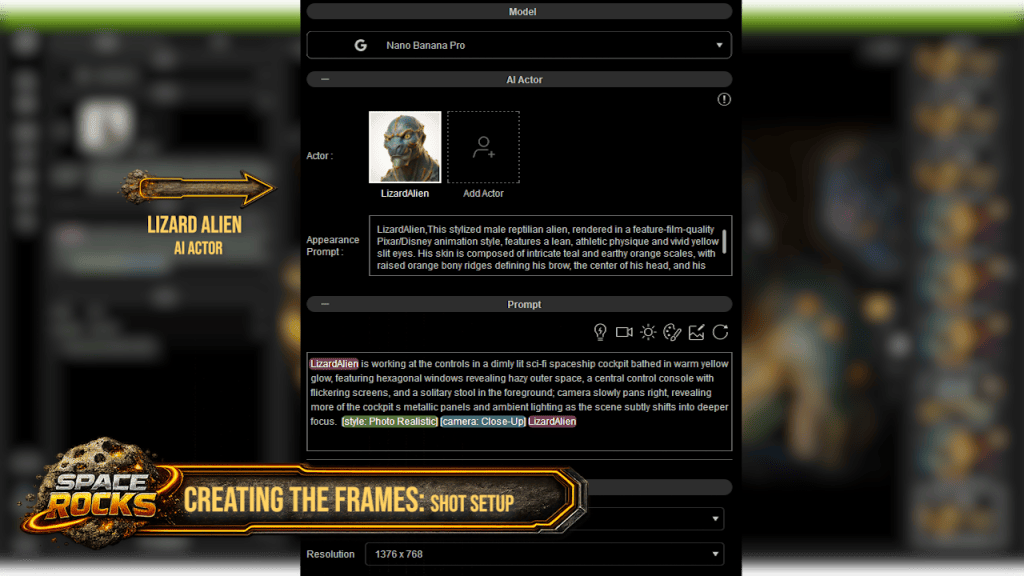
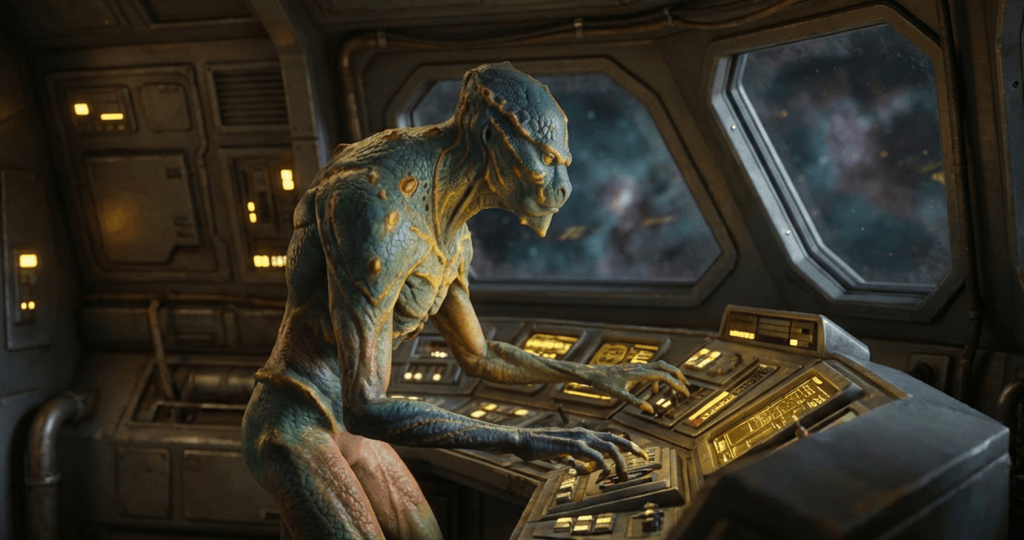
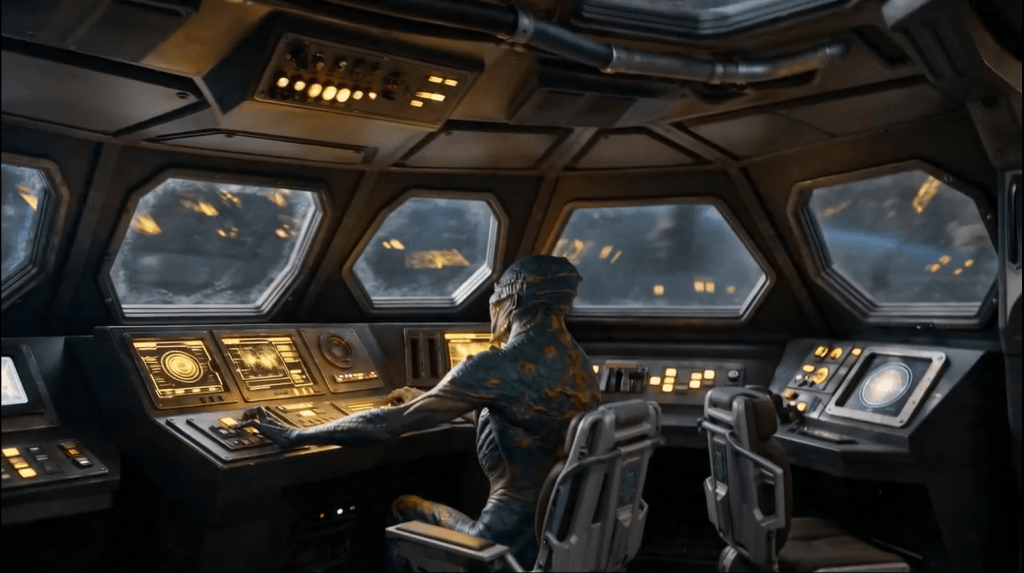
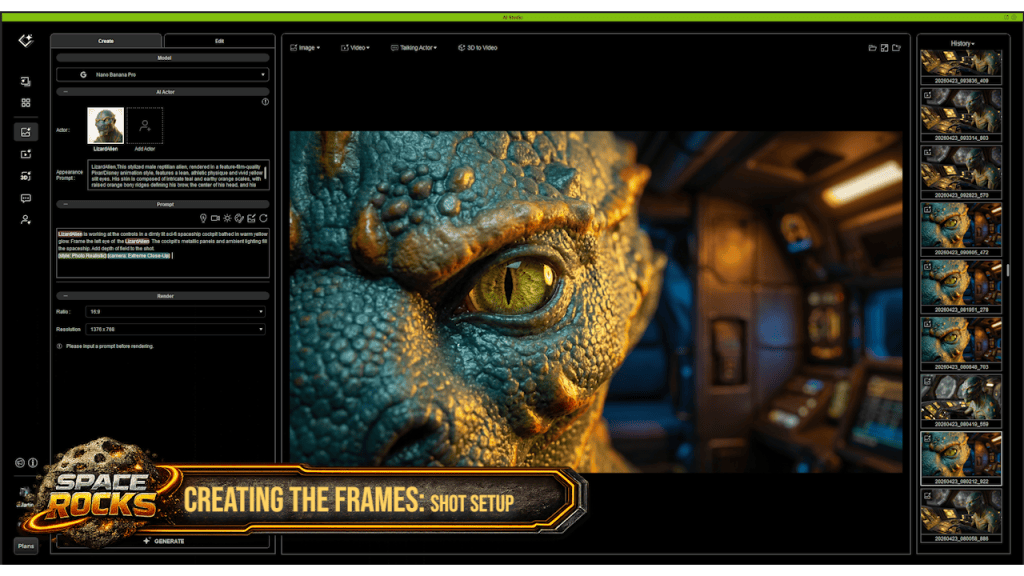
Nano Banana for Image Gen in AI Studio was used here as the results with this model were the best for the dimly lit sci-fi spaceship look.
The AI Actor is the essential element to cast characters that will maintain continuity shot by shot.
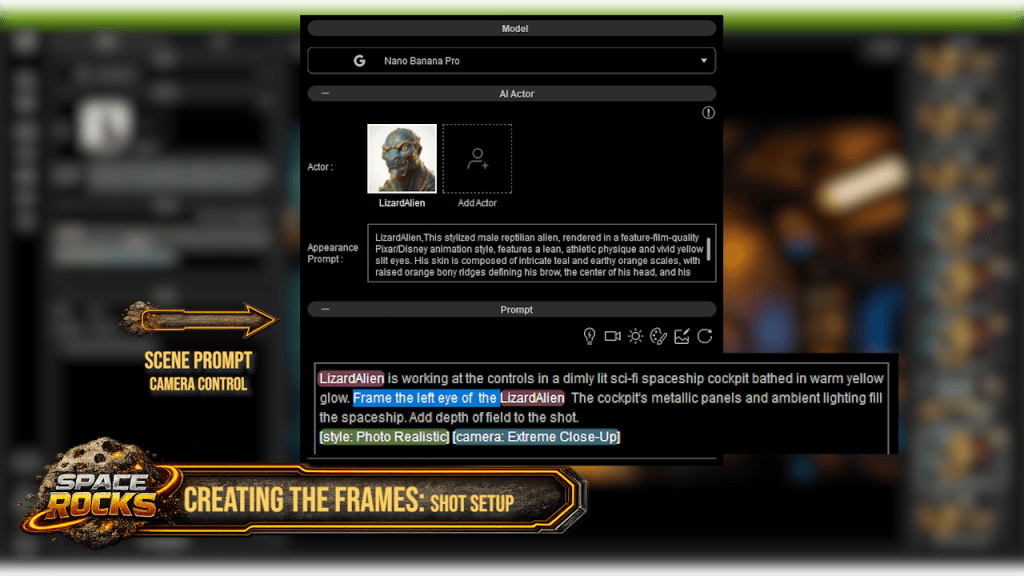
The Prompt is where all the details about scene design, lighting, cameras, AI Actors, and action are designed for the initial image generation. The prompt is best approached as a way to inform the shot, direct the action, and achieve the first frame of your shot that will drive your video generation. Along with your text prompt, Reallusion AI Studio has a helpful menu of Camera and Style presets that will empower the look of every shot.
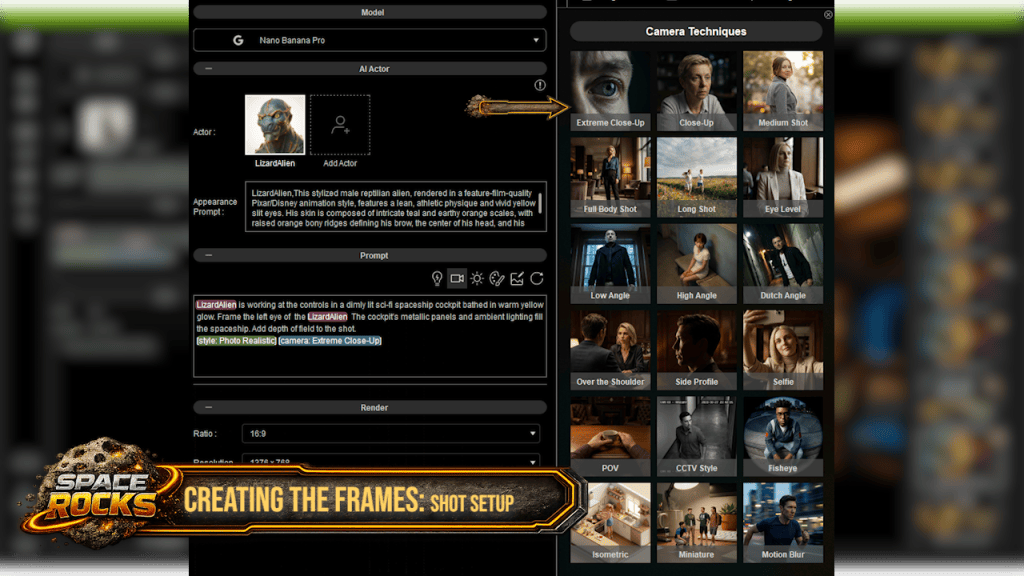
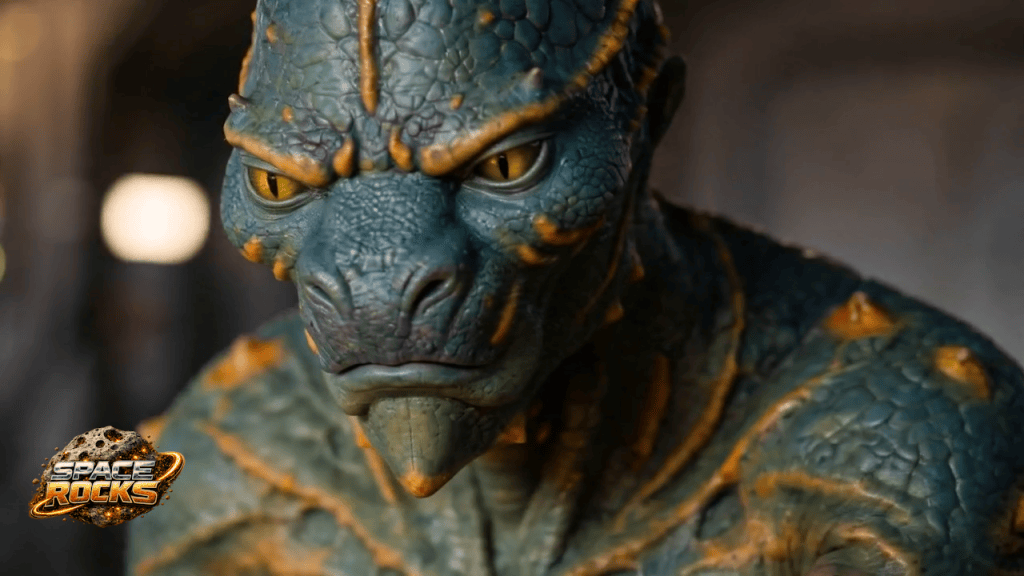
The prompt for the first shot is all about framing the Lizard Alien’s left eye with camera prompting and the Extreme Closeup camera from AI Studio.
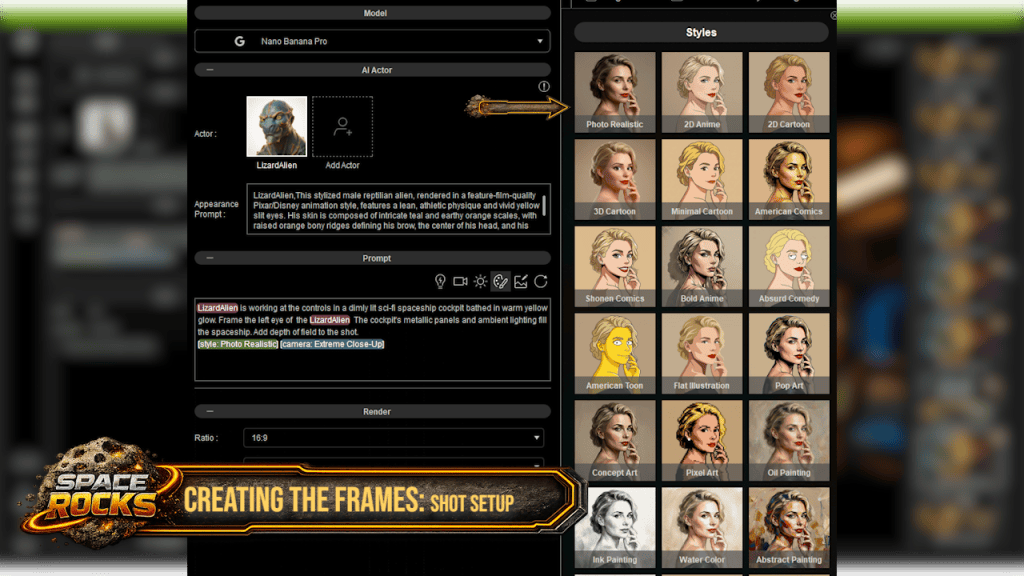
To ensure that the image was photoreal, the Style for Photo Realism was applied to emphasize the complete scene tone.
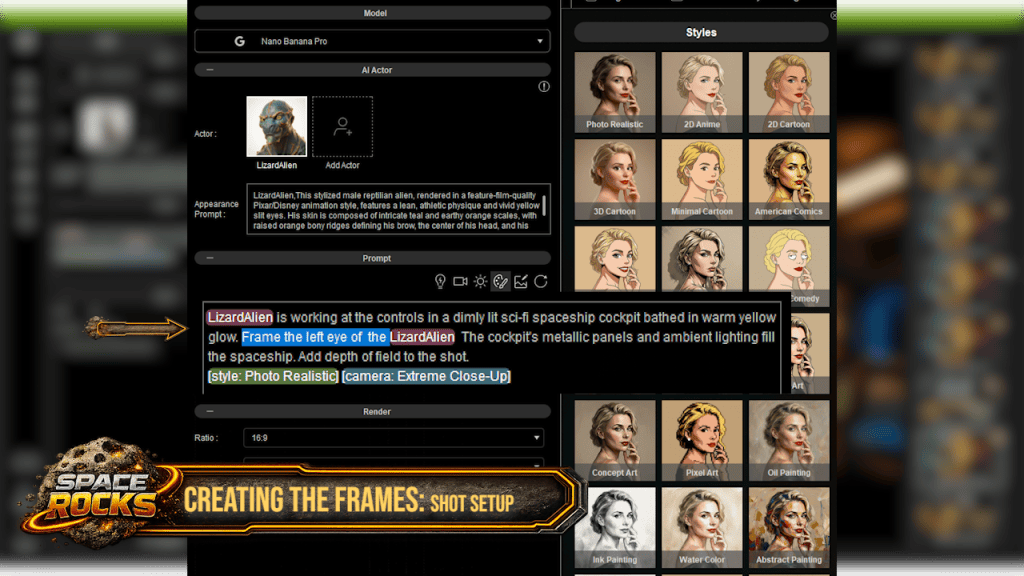
The final prompt informs the shot to focus on the extreme close-up camera of the Lizard Alien’s left eye with depth of field, and the scene to maintain photo realism with the style. Lighting is directed to be a warm yellow glow and ambient. The AI Actor is the subject, and the shot is all about the prompt. Sometimes a lengthy prompt with massive details will suit best, and other times simplicity is as powerful.
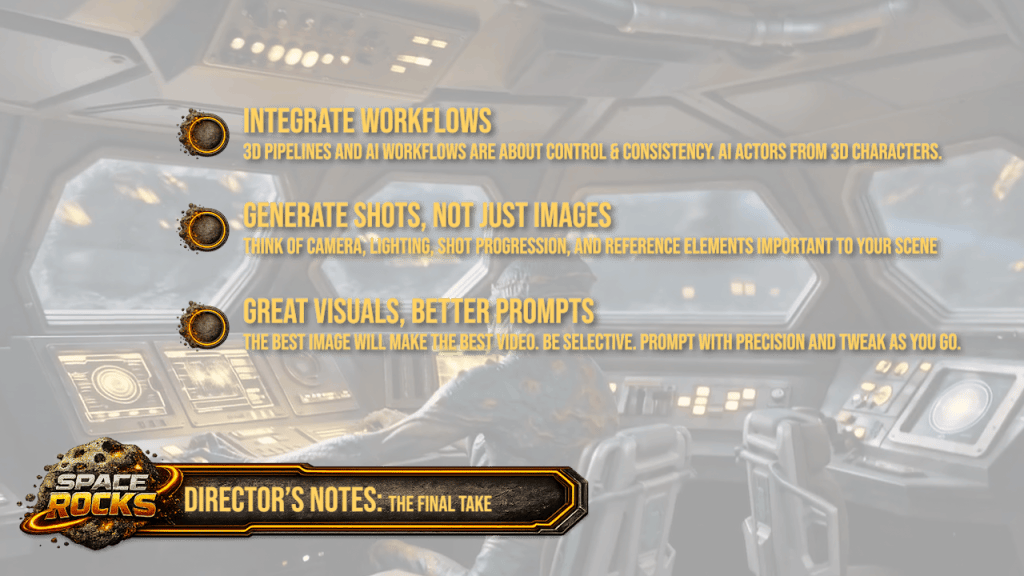
By combining Character Creator, iClone, and AI Studio, a single creator can develop cinematic productions that maintain continuity, visual consistency, and creative control while benefiting from the speed and flexibility of AI-powered content generation.
Rather than replacing traditional storytelling principles, AI Studio extends them—giving creators new ways to visualize ideas, refine narratives, and build worlds.
The New Independent Filmmaker
Projects like Space Rocks represent a shift in how stories can be created.
For independent filmmakers, AI is not simply about generating content faster. It is about expanding creative possibilities. It allows creators to visualize worlds that may have previously existed only in their imagination and to explore ideas without the limitations of traditional production resources.
Through AI Studio Storytellers, Space Rocks demonstrates that compelling science fiction no longer requires a major studio, a visual effects department, or a massive production pipeline.
By combining Character Creator, iClone, and AI Studio, John Martin transformed a 3D character into a consistent AI Actor capable of performing across an entire production. The result demonstrates how creators can maintain the continuity, direction, and visual consistency expected of traditional filmmaking while embracing the speed and flexibility of AI-powered storytelling.
Sometimes it starts with a single creator, a story to tell, and the willingness to explore what is possible.
The future of storytelling belongs to creators who can imagine new worlds and bring them to life.
Space Rocks is the first episode of AI Studio Storytellers, celebrating the new frontier of filmmaking with Reallusion AI Studio. Stay tuned for more!
John Martin
John Martin is a producer, digital storyteller, and Vice President of Marketing at Reallusion, where he has spent more than two decades helping shape the future of real-time animation, digital humans, and AI-powered content creation. With a background spanning filmmaking, performance capture, animation, and emerging technologies, John has been instrumental in the development and testing of AI Studio, helping refine workflows that connect traditional CG production with generative AI. His passion is empowering storytellers with innovative tools that transform imagination into cinematic experiences.
Related Posts
- Reallusion Announces AI Studio: The AI Creation Workflow Built for 3D Artists
- Neri Neto Explores Reallusion’s Hybrid AI 2026 Vision